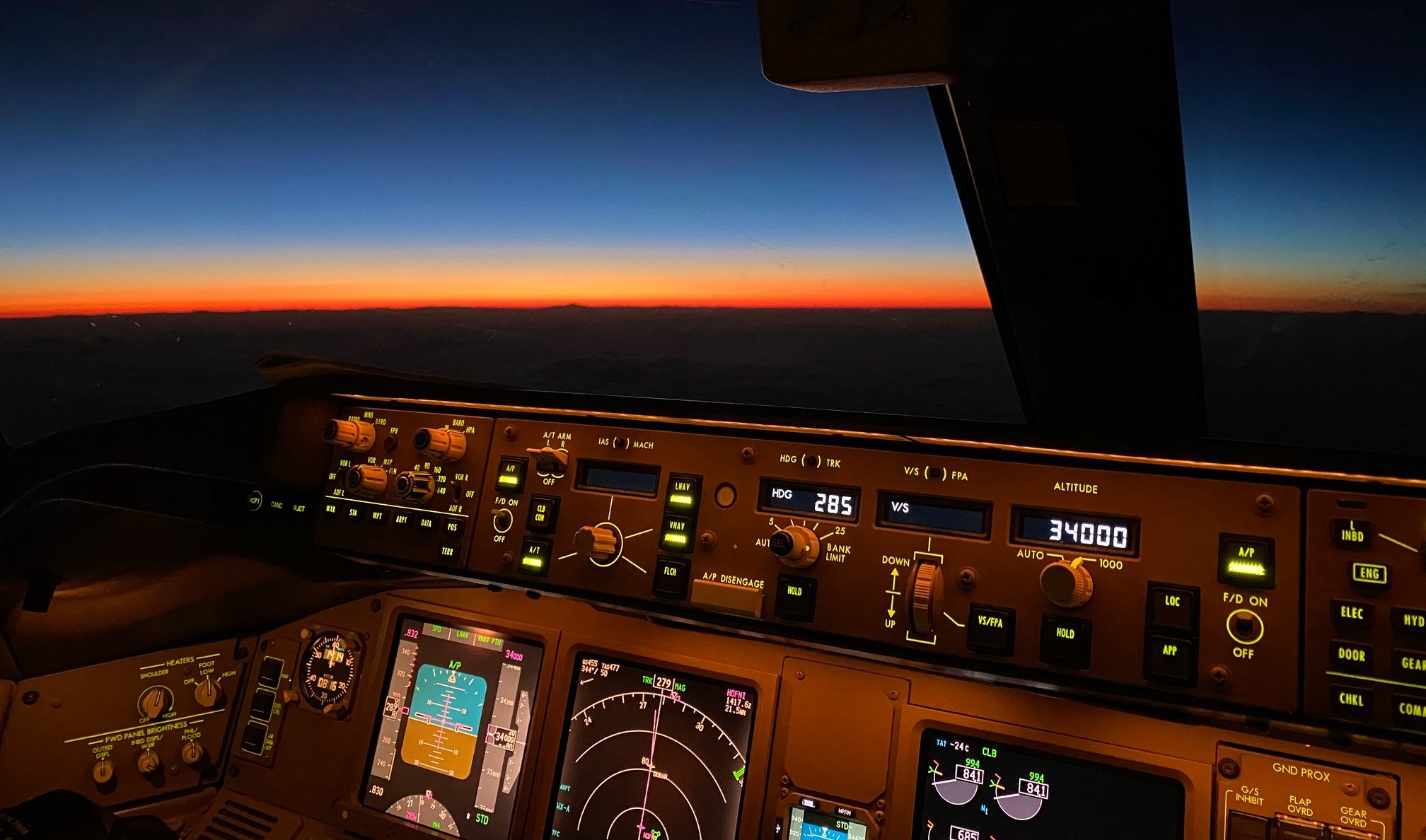
Armed with 3 hours of rest in the afternoon, I was ready to take on the red eye flight to the orient, or so i thought. After reviewing the flight briefing package which usually is available 3 hours before the time of departure, it seems like it’s gonna be a straightforward flight. It has only been 1 month since I flew to the same city, memories of the operations were still quite fresh in my mind. Experience goes a long way in our career especially so for us, given the amount of “traps” we are constantly surrounded with in our work. (Another topic for another day I guess…)
I digress for a while, the flight briefing package consists everything the pilot should know. That includes the flight plan itself which includes the routing of the flight, the expected runway for both departure and destination airports, the flight time (which is the time given to passengers), total fuel needed for the flight (that includes all reserves and taxi fuel), alternate airport that has been planned, high terrain along our route if there is any, EDTO (Extended Diversion Time Operations) departure planning. Also included is the Significant Weather Charts, INTAMS (which is an internal notice to pilots in the event information is unable to be included into our manuals in time and INTAMS are of the highest priority of promulgated information) and most importantly, the ATC flight plan (which is a summarized version of our flight plan to be sent to the ATC controllers for sequencing).
STD-1 hour is our reporting time to the aircraft. I met our set of lovely crew and we made our way to the aircraft only to be stopped by the engineering crew. He signaled us to head back into the gate and when probed, he advised that the cabin is too warm for our anyone to work in. I took a glance at the aircraft and the cockpit was pitch dark. “Strange”, I thought. Usually, the aircraft will already be powered up before the crew arrives at the aircraft. And soon after, I was told that the “APU (Auxiliary Power Unit) was inoperational. The APU is the aircraft’s 3rd engine (considering I fly the B777) and just like our 2 engines, it supplies the aircraft with electrical power and conditioned air before the engines are started. It just makes the environment more comfortable to work in for ourselves and the cabin crew while preparing for the flight. It is normally used on ground and during flight in the event of a non-normal situation. In this case, without the APU, we have to utilize the ground electrical power and external conditioned air. And it was explained to us that the ground supply power that was initially used to power the aircraft has tripped and engineering service was exchanging to a substitute. That explains why the aircraft was unpowered.
We were given the approval to proceed into the aircraft and boy, was it warm inside. I checked the air synoptic page and it was showing 30 degrees in the cockpit and 30-32 degrees in the cabin. No…….
When they finally connected the external air-conditioned ducts to the aircraft, it only managed to bring the cabin temperature down to 28 degrees. Without the APU operating, the cabin temperature would remain as it was until the engines were started.
With the APU inoperational, there are a few considerations and operational requirements for the flight. The requirements are set by Boeing coupled with company’s operational needs. The requirements are: 1) The flight must remain within 180 minutes of landing at a suitable airport. 2) The flight must not be planned with Learmonth or Ohakea as an alternate due to the limited available support services at these airports. 3) The Backup AC electrical power system must be verified to operate normally. The Backup AC electrical power system serves as an additional electrical power source. In the event of the APU inoperational (which in our case, it was), the backup AC electrical power system will need to provide the needed requirements to the AC source. We confirmed that the requirements did not affect our flight and dispatch wasn’t an issue. We then proceeded to discuss starting an engine at the bay (something we do not do on a regular basis). Good coordination between pilots, ATC and the ground crew was needed.
In normal operations, engines are starting while pushing back from the gate. In our case, we were unable to do that because the APU wasn’t operating. The APU provides the bleed air to drive the starter motor in the engines which coupled with fuel and ignition, provides the mix for engine start and viola…2x 115,000 lbf engines are at our disposal. By starting one engine at the bay, the aircraft will be supplied with electrical power and conditioned air independently from one engine.
Another consideration to think about is the comfort of our passengers. Do we want to board them on time only to have 200+ souls stuck in a 30 degrees cabin? Skipper discussed with our in-flight manager to delay boarding with the aim that the external air conditioning ducts were working at full blast to cool the cabin.
Normally by STD-20 minutes, the cockpit will already be set up for departure. STD-5 minutes, we will proceed to put in our clearance with the tower controllers. They will then sequence our flight accordingly. Now this was where our night has just started…and it was 1am in the morning…
Delivery frequency 121.65 was tuned, mic was selected and clearance was requested,
“Delivery, Singapore 800 good morning”…..silence entailed.
We could hear other airlines making the same calls with the same outcome. We tried calling in ground frequency 124.30 and related to the controller, “negative contact established with delivery controller”. The ground controller told us plainly to monitor ground frequency with no other information. We then proceeded to monitor delivery frequency. As we waited, futile attempts for clearances were still being requested by other airlines until one voice interjected the comms with
“All stations, tower is evacuating, please standby…”
From then on, it was pure chaos. Pilots started questioning the ATC. They needed information to decide on the next course of action. There was zero. There weren’t any updates or further information from the controllers. We were continually being told to “standby”. At one point, I thought to myself, “give the controllers a break”. They were bombarded with endless questions with no definite solutions in sight.
Skipper was quick. We told the ground crew we needed more fuel. We were uncertain how long the delay would be. With the additional fuel, we had the option to fly at a higher speed to minimise the delay. Fortunately, we were quick to call for the fuel bowser, it came within 15 minutes. It will be hard to call for the services we need when everybody needs it at the same time. We took on extra 1,500kg of fuel and sent the new fuel figures to our load controllers who then helped us to work out the weight and balance limits of the aircraft, ensuring it will not be exceeded.
It didn’t help that our APU was inoperational. As explained earlier, up until the point where engines were started, the aircraft was supplied with external conditioned air which as compared to the APU, wasn’t effective in cooling the aircraft. Without air traffic clearance and approval from ground controllers to start the engines, we were left in the doldrums. What a combo….
It was STD+50 minutes. Boarding was delayed since the delay was indefinite. We did not know what was happening. I have never heard the word “standby” being used by the ATC controllers so frequently. I guessed they themselves did not know what was happening. My guess is they had to evacuate to their backup stations to resume their operations. Kudos to them for handling the impatient pilots, they remained their cool despite being hounded.
STD+70 minutes, a voice emerged from the comms, asking for cooperation of all pilots that the system was slowly regaining its footing and not to jam the comms. Finally, the first clearance was issued and as soon as that was said, chaos ensued once more. Pilots started to request for clearance. It is supposed to be plain radio etiquette to speak only after the receiving party replies and acknowledges. No chance was given for them to acknowledge, pilots started to cut in resulting in alot of blocked comms. The tower controller interjected “All stations, please do not jam the comms, I’ll call you” It didn’t help and requests for clearance were still being transmitted over the radio.
We thought if we didn’t put up a clearance request, there would be no end to it. Skipper then suggested to put in a request when the chance came. At that point, boarding has started with the aim that we could depart as soon as we got the clearance.
After numerous tries of contacting delivery, we received our clearance and were all set to go. Wait a minute………..where is our tow tug? Without the tow tug, the aircraft can’t be pushed back. It’s as if the whole airport was at a standstill when tower evacuated, and once the floodgate opened, every aircraft was preparing to pushback. The tug tow that was supposed to tag to our aircraft was stuck in T2. One thing led to another….
Skipper was quick once again. He noticed another company aircraft next to us was waiting and it has a tow tug attached to it. We tried all means to “rob” the tow tug and “returning” it after we’ve used it but to no avail. Our tow tug arrived before all the liaising between control center and the tow tug drivers were done. Imagine the frustration; we got our clearance, we can push back but we’ve got no tow tug to push us back. Not forgetting the cockpit was still as warm as ever since we entered, double whammy. Yikes.
Something I’ve learnt; to be proactive in gathering information and thinking of ideas that are out of the box to solve it. Some say flying is as straightforward but is it? There are so many considerations and decisions to be made. If ever it is so easy, we wouldn’t be here….


Cool information!
LikeLike