The aircraft took off without me

It was the last sector of a 3 sector long flight to Jakarta. Weather has been marginal with occasional showers throughout the day. Unfortunately before I left the aircraft for the pre-flight exterior inspection, I saw what seemed like tiny droplets of rain sputtering on the cockpit window and the intensity of the rain increased slowly but surely. I thought: “how lucky?” On both of the sectors out of Singapore, I had to don the raincoat. Yikes!

It was my sector out of Singapore. Our flight was a tankering flight, meaning we uplifted the fuel required on the returning flight from Jakarta because it’s more economical to do so. An updated ATIS was taken and it was showing “+RA (heavy rain) with an aerodrome warning on the north approach and is intensifying”. While doing the preliminary performance calculation, the runway condition was taken into account as a wet runway. V1 speed was thus reduced to account for the increased runway length needed in the event of a rejected takeoff. I ran through my mind the considerations for the current external environment that we were in.

Considerations:

  • Ensure wipers are working. It is a no-go item in the event of precipitation
  • If anti-ice is to be used throughout the takeoff-roll, it has to be taken into account for the takeoff performance
  • Ensure seatbelts signs to be kept on throughout the takeoff and climb phases
  • Runway will be wet and it is prudent to taxi at a slower speed,  giving special considerations when carrying out tight turns to prevent skidding
  • On the takeoff run, there might be a possibility of a windshear warning.  To ensure both crew are on the same loop, one must want to include the windshear escape manoeuvre as part of the pre-flight briefing
  • To improve takeoff performance and to widen the margin of the runway needed in the event of a windshear event, full takeoff thrust is available to be to be used for the takeoff
  • If there is no speed control, to fly the best turbulent penetration speed for the aircraft type
  • If the clouds surrounding the aerodrome during the climb phase are just stratus clouds and not cumulus ones, higher climb power can be selected to expedite the climb out of the clouds

I opted for full derated thrust takeoff in view of the weather. Captain agreed.  Additional thrust allows the aircraft to accelerate quicker. The aim is to lift off from the ground sooner because there might be a chance of a windshear at the point of lift off. This will be a cause of concern as airspeed might stagnate and the aircraft will be struggling to climb, thus “eating up the remaining length of the runway”. We try to minimize the chance of it happening.

We went through the performance calculations and keyed them into the Flight Management Computer (FMC) after both of us concurred. All decisions and considerations are done with keeping each other in the loop, it forms a layer of check in the event there is an error. Reading out the performance figures aloud is one of the cross-check layers we do to ensure both crew members ascertain that their own performance numbers are correct. Ultimately, those are the speeds that we use to decide for a rejected takeoff and also the speed when the aircraft lifts off from the ground.

There was minimum traffic on the ground and we were at the holding point in no time. As soon as we lined up on the runway, ATC gave us the clearance to takeoff. Captain advanced the thrust levers.

“Woah, the roar of the engine sure sounds different”, I thought to myself as the aircraft jetted off.

As mentioned earlier, we agreed that full derated thrust should be used for the takeoff sequence given the inclement weather surrounding the aerodrome. In all situations, we enlist the computing power of our Electronic Flight Bag (EFB) to churn out the takeoff speeds for us. The speeds are considered the most “economical” in that it trades off the excess runway that we have (given that it’s not field length limited) and in return, our decision and takeoff speeds are higher (improved climb performance). By technically having more runway length to spare, this allows the engines to be derated with a temperature gradient to bring down the thrust of the engines even more.  This is termed an improved climb takeoff. As a result of this, there will be lesser wear and tear imposed on the engines, thus saving the company in maintenance cost.

As soon as the aircraft lifted off, pitch was increased to maintain the optimum climb speed. Due to the excess thrust, pitch has to increase to more than the 10-11 degrees experienced in an improved climb takeoff. Autopilot was engaged. As soon as we established on the climbout, ATC gave us a right heading of 115 degrees. The aircraft was climbing at a rate of close to 3500ft/min and increasing. The aircraft’s weight was light at about 194T. Soon after, ATC instructed us to expedite climb to 10,000ft. At that stage, aircraft was in a clean configuration. I thought we were doing “ok” on the climbout. With a rate of climb of 3500ft/min, well at least to me, the aircraft was expediting.

Captain: “Full climb?”

Now, the aircraft was rocketing through the skies. Notwithstanding, there was weather approximately 15nm ahead. I had to be prompted when the aircraft’s flight mode annunciated “VNAV PTH” as the aircraft captured the altitude constraint. This happened due to the altitude constraint at the waypoint DOGRA which limits the aircraft altitude to “At or below 6000ft”.  Earlier, ATC has given us a heading and thus the altitude constraint deemed invalid. So, with the aircraft climbing expeditiously with weather ahead of us, notwithstanding the confusing flight mode annunciations, I was left behind at the runway, not physically of course, but mentally.

Reflecting back, it pays to know the aircraft’s performance with the kind of takeoff thrust that we normally are not exposed to. It didn’t help with ATC’s instruction to expedite climb in the terminal area with the aircraft already doing a substantial rate of climb. Events happened fast and there’s a need to keep up with the pace. I’m glad it happened, I learnt something.

  • As human beings, we are all prone to the concept of “the norms”. We feel comfortable with the norms. Once something is out of the ordinary, a tinge of uneasiness sets in. The spool-up of the engines during takeoff was out of the ordinary. Being aware of the uneasiness and having prior knowledge of it helps. One will be prepared for it
  • Knowing that the pitch attitude at rotation will need to be increased (in our case, to about 15-16 degrees) to maintain the optimal climb speed
  • If, after the aircraft has lifted off and is reaching  the first altitude constraint/SID limit altitude, consider lowering the thrust by selecting CLB thrust before the aircraft conducts a reduction of thrust on its own
  • Having mentioned all of the above, awareness is key. But sometimes, it’s just not your day…

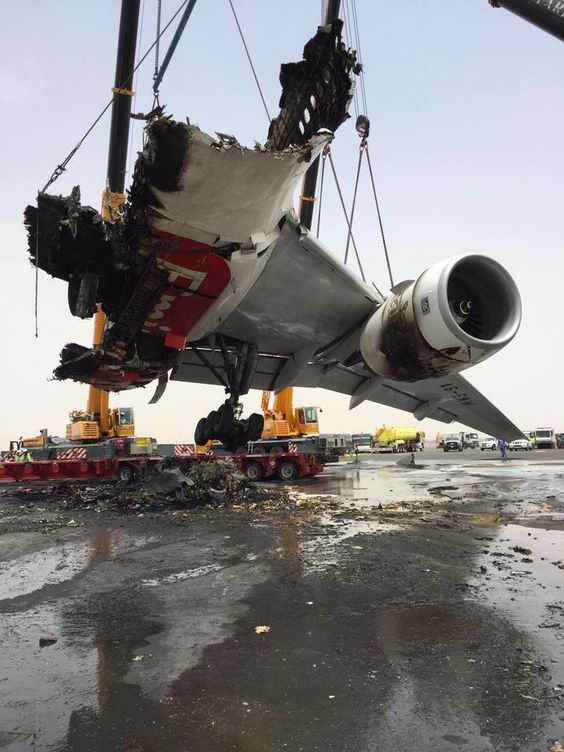
It could have happened to anybody; swiss cheese model?

History:

  • The crew attempted a tailwind landing with an increased airspeed due to shift in wind direction
  • The aircraft passed over the threshold at 159kts which is 7kts above the approach speed (vref+5kts). The speed was still within the operator’s stabilization guidelines
  • As the aircraft passed the aim point and approximately 480m beyond the threshold, airspeed increased to 165kts due to a wind shift to a headwind component
  • As a result of the increased headwind, the descent rate decreased from 432fpm to 80fpm
  • Crew did not notice the increase in airspeed as they were focused outside the aircraft
  • The commander thought it was thermals causing the aircraft to “float” when it was the increased headwind. Commander made several inputs to maintain wings level and to keep the aircraft aligned with the centreline of the runway
  • When the aircraft “floated”, it rolled to the left due to the wind effect and the commander counteracted with right control wheel input which caused the right wing to dip. As a result, the right main landing gear contacted the runway, approximately 10 seconds after the flare was initiated. The main wheel contact caused the logic of the flight system to go into ground mode
  • Approximately 2.5 seconds after the right main wheel contacted the runway, the commander decided to go-around with the perception that the aircraft was still airborne
  • The crew was unaware that the right main gear had touched down which caused the TO/GA switches to become inhibited
  • Normal go-around procedures call for flaps to be raised to flaps 20 and gear to be retracted after positive rate of climb was established
  • The crew carried out the correct procedures but because the flight logic was already in ground mode, go-around thrust wasn’t automatically commanded by the autothrottle system. The thrust remained at idle
  • With headwind component of 8kts, the aircraft became airborne 1,590m beyond the threshold at 153kts (6 kts above approach speed). Flaps were raised to flaps 20
  • Operator’s go-around/missed approach procedure calls for the pilot monitoring (PM) to verify go-around attitude and that engine thrust is increasing but the procedure did not require a verbal announcement and thus it was not possible for either crewmember to crosscheck each other
  • The Co-pilot (PM) called positive rate when the VSI was approximately 592ft/min as airspeed was decreasing towards 147kts. This was followed by the commander’s call to “gear up”. Airspeed continued to decrease  to 145kts with pitch angle increasing towards 8.4 degrees
  • During the time between the commander’s call to “Gear up” and the gear selection by the co-pilot (PM), tower modified the go-around instructions. The airspeed was now 131kts with the aircraft sinking
  • Less than 12.5 seconds from the time go-around was initiated, the aircraft had insufficient energy to gain further height. The crew noticed the loss of airspeed and the commander perceived it as a windshear. He carried out the windshear escape manoeuvre and advanced the thrust levers fully forward but it was too late
  • 18 seconds after the initiation of go-around, the height available was insufficient for the aircraft to recover from the low-speed condition. The aircraft impacted the ground

Causes of the Accident:

  • Lack of awareness to scan and monitor the primary flight instruments during the landing and go-around phases                                        
  • Flight crew was unaware that the Autothrottle (A/T) had not responded to command the engine thrust levers to TOGA position after the commander pushed the TO/GA switches
  • The crew did not monitor the flight mode annunciations (FMA) changes after the TO/GA switches were pushed (FMA changes callouts are not required according to the operator’s procedure below 200ft)
  • Crew’s reliance on automation and lack of training in flying go-arounds from close to the runway surface affected their performance in a critical flight situation
  • Aircraft systems did not alert the flight crew that the TO/GA switches were inhibited at the time when the commander pushed the TO/GA switches with the A/T armed and active
  • ATC did not pass essential information about windshear reported by a preceding aircraft and that two aircrafts had conducted missed-approachs. The flight crew was deprived of the information to make a decision on whether to continue the approach
  • Workload was increased when just as the gear was selected up, ATC modified the go-around altitude instruction from 3,000ft to 4,000ft. The flight crew’s concentration was momentarily affected as a result

Comments:

During the landing phase, to be specific; the last 100ft till the aircraft touches down, pilots rely 100% on peripheral vision as their vision shift to the outside of the aircraft with little or no reference to the instrumentation. Some captains recommend/advise that just before the flare, to take a glance into the cockpit at the instrumentation to ensure the rate of descent shallows off “by the disappearance of the IVSI”. The chances of a hard-landing will thus be reduced. While there is no official guidance on this, I personally do not practise this. Distraction entails when attention needs to be consciously shifted into the cockpit and this all happens when events are moving fast; we are talking about seconds from the main gear touching down the runway. Unnecessary distraction might lead to unintentional consequence; failure to maintain/control the aircraft’s pitch at the last 10-20ft.

  • The most important aspect to take away from this accident is the importance of monitoring the aircraft during go-around. My company’s procedures state that pilot monitoring (PM):

        1) Verify and call FMA display “THRUST, TO/GA, TO/GA” 

        2) Verify flaps 20 indication on EICAS

        3) Verify go-around attitude and thrust increases 

        4) Verify thrust is adequate for go-around, adjust if necessary

        5) Verify positive rate of climb and call “Positive Rate”           

While I’m sure Emirates’s procedures are the same to same extent because these are Boeing’s recommendations, the accident could have been prevented if they had practised point 1. If only the PM called out “THRUST, TO/GA, TO/GA” but in their case, the Flight Mode Annuciations (FMA) was “IDLE, LOC, GS”, they would have noticed the Autopilot Flight Director System (AFDS) did not activate the go-around sequence with go-around thrust and so the pilot flying (PF) will have to intervene and manually engage full thrust.

Another issue here is the verification of positive rate before calling for “gear up”. In normal operations during the takeoff roll, as the aircraft approaches rotation speed and lifts off, positive rate is identified when both radio altimeter and baro-altimeter indications are increasing. Thereafter, the pilot flying (PF) calls for “gear up” and the pilot monitoring (PM) selects the gear lever to be raised. During go-arounds, the same procedure applies. But in the case of EK521, due to the lack of thrust, even though both radio altimeter and baro-altimeter indications are increasing, the aircraft simply wasn’t climbing in the normal sense. Granted, with procedures in place, we as pilots base it off rode memory to execute the procedure during go-around. So how can we safeguard ourselves? One learning point we can take away from this is also to verify that airspeed is indeed increasing and not decaying. If the airspeed is decaying and is on a downward trend, basic airmanship needs to come into play. Aviate first.

It’s gonna be a long night

Armed with 3 hours of rest in the afternoon, I was ready to take on the red eye flight to the orient, or so i thought. After reviewing the flight briefing package which usually is available 3 hours before the time of departure, it seems like it’s gonna be a straightforward flight. It has only been 1 month since I flew to the same city, memories of the operations were still quite fresh in my mind. Experience goes a long way in our career especially so for us, given the amount of “traps” we are constantly surrounded with in our work. (Another topic for another day I guess…)

I digress for a while, the flight briefing package consists everything the pilot should know. That includes the flight plan itself which includes the routing of the flight, the expected runway for both departure and destination airports, the flight time (which is the time given to passengers), total fuel needed for the flight (that includes all reserves and taxi fuel), alternate airport that has been planned, high terrain along our route if there is any, EDTO (Extended Diversion Time Operations) departure planning. Also included is the Significant Weather Charts, INTAMS (which is an internal notice to pilots in the event information is unable to be included into our manuals in time and INTAMS are of the highest priority of promulgated information) and most importantly, the ATC flight plan (which is a summarized version of our flight plan to be sent to the ATC controllers for sequencing).

STD-1 hour is our reporting time to the aircraft. I met our set of lovely crew and we made our way to the aircraft only to be stopped by the engineering crew. He signaled us to head back into the gate and when probed, he advised that the cabin is too warm for our anyone to work in. I took a glance at the aircraft and the cockpit was pitch dark. “Strange”, I thought. Usually, the aircraft will already be powered up before the crew arrives at the aircraft. And soon after, I was told that the “APU (Auxiliary Power Unit) was inoperational. The APU is the aircraft’s 3rd engine (considering I fly the B777) and just like our 2 engines, it supplies the aircraft with electrical power and conditioned air before the engines are started. It just makes the environment more comfortable to work in for ourselves and the cabin crew while preparing for the flight. It is normally used on ground and during flight in the event of a non-normal situation. In this case, without the APU, we have to utilize the ground electrical power and external conditioned air. And it was explained to us that the ground supply power that was initially used to power the aircraft has tripped and engineering service was exchanging to a substitute. That explains why the aircraft was unpowered.

We were given the approval to proceed into the aircraft and boy, was it warm inside. I checked the air synoptic page and it was showing 30 degrees in the cockpit and 30-32 degrees in the cabin. No…….

When they finally connected the external air-conditioned ducts to the aircraft, it only managed to bring the cabin temperature down to 28 degrees. Without the APU operating, the cabin temperature would remain as it was until the engines were started.

With the APU inoperational, there are a few considerations and operational requirements for the flight. The requirements are set by Boeing coupled with company’s operational needs. The requirements are: 1) The flight must remain within 180 minutes of landing at a suitable airport. 2) The flight must not be planned with Learmonth or Ohakea as an alternate due to the limited available support services at these airports. 3) The Backup AC electrical power system must be verified to operate normally. The Backup AC electrical power system serves as an additional electrical power source. In the event of the APU inoperational (which in our case, it was), the backup AC electrical power system will need to provide the needed requirements to the AC source. We confirmed that the requirements did not affect our flight and dispatch wasn’t an issue. We then proceeded to discuss starting an engine at the bay (something we do not do on a regular basis). Good coordination between pilots, ATC and the ground crew was needed.

In normal operations, engines are starting while pushing back from the gate. In our case, we were unable to do that because the APU wasn’t operating. The APU provides the bleed air to drive the starter motor in the engines which coupled with fuel and ignition, provides the mix for engine start and viola…2x 115,000 lbf engines are at our disposal. By starting one engine at the bay, the aircraft will be supplied with electrical power and conditioned air independently from one engine.

Another consideration to think about is the comfort of our passengers. Do we want to board them on time only to have 200+ souls stuck in a 30 degrees cabin? Skipper discussed with our in-flight manager to delay boarding with the aim that the external air conditioning ducts were working at full blast to cool the cabin.

Normally by STD-20 minutes, the cockpit will already be set up for departure. STD-5 minutes, we will proceed to put in our clearance with the tower controllers. They will then sequence our flight accordingly. Now this was where our night has just started…and it was 1am in the morning…

Delivery frequency 121.65 was tuned, mic was selected and clearance was requested,

“Delivery, Singapore 800 good morning”…..silence entailed.

We could hear other airlines making the same calls with the same outcome. We tried calling in ground frequency 124.30 and related to the controller, “negative contact established with delivery controller”. The ground controller told us plainly to monitor ground frequency with no other information. We then proceeded to monitor delivery frequency. As we waited, futile attempts for clearances were still being requested by other airlines until one voice interjected the comms with

“All stations, tower is evacuating, please standby…”

From then on, it was pure chaos. Pilots started questioning the ATC. They needed information to decide on the next course of action. There was zero. There weren’t any updates or further information from the controllers. We were continually being told to “standby”. At one point, I thought to myself, “give the controllers a break”. They were bombarded with endless questions with no definite solutions in sight.

Skipper was quick. We told the ground crew we needed more fuel. We were uncertain how long the delay would be. With the additional fuel, we had the option to fly at a higher speed to minimise the delay. Fortunately, we were quick to call for the fuel bowser, it came within 15 minutes. It will be hard to call for the services we need when everybody needs it at the same time. We took on extra 1,500kg of fuel and sent the new fuel figures to our load controllers who then helped us to work out the weight and balance limits of the aircraft, ensuring it will not be exceeded.

It didn’t help that our APU was inoperational. As explained earlier, up until the point where engines were started, the aircraft was supplied with external conditioned air which as compared to the APU, wasn’t effective in cooling the aircraft. Without air traffic clearance and approval from ground controllers to start the engines, we were left in the doldrums. What a combo….

It was STD+50 minutes. Boarding was delayed since the delay was indefinite. We did not know what was happening. I have never heard the word “standby” being used by the ATC controllers so frequently. I guessed they themselves did not know what was happening. My guess is they had to evacuate to their backup stations to resume their operations. Kudos to them for handling the impatient pilots, they remained their cool despite being hounded.

STD+70 minutes, a voice emerged from the comms, asking for cooperation of all pilots that the system was slowly regaining its footing and not to jam the comms. Finally, the first clearance was issued and as soon as that was said, chaos ensued once more. Pilots started to request for clearance. It is supposed to be plain radio etiquette to speak only after the receiving party replies and acknowledges. No chance was given for them to acknowledge, pilots started to cut in resulting in alot of blocked comms. The tower controller interjected “All stations, please do not jam the comms, I’ll call you” It didn’t help and requests for clearance were still being transmitted over the radio.

We thought if we didn’t put up a clearance request, there would be no end to it. Skipper then suggested to put in a request when the chance came. At that point, boarding has started with the aim that we could depart as soon as we got the clearance.

After numerous tries of contacting delivery, we received our clearance and were all set to go. Wait a minute………..where is our tow tug? Without the tow tug, the aircraft can’t be pushed back. It’s as if the whole airport was at a standstill when tower evacuated, and once the floodgate opened, every aircraft was preparing to pushback. The tug tow that was supposed to tag to our aircraft was stuck in T2. One thing led to another….

Skipper was quick once again. He noticed another company aircraft next to us was waiting and it has a tow tug attached to it. We tried all means to “rob” the tow tug and “returning” it after we’ve used it but to no avail. Our tow tug arrived before all the liaising between control center and the tow tug drivers were done. Imagine the frustration; we got our clearance, we can push back but we’ve got no tow tug to push us back. Not forgetting the cockpit was still as warm as ever since we entered, double whammy. Yikes.

Something I’ve learnt; to be proactive in gathering information and thinking of ideas that are out of the box to solve it. Some say flying is as straightforward but is it? There are so many considerations and decisions to be made. If ever it is so easy, we wouldn’t be here….

Objectives

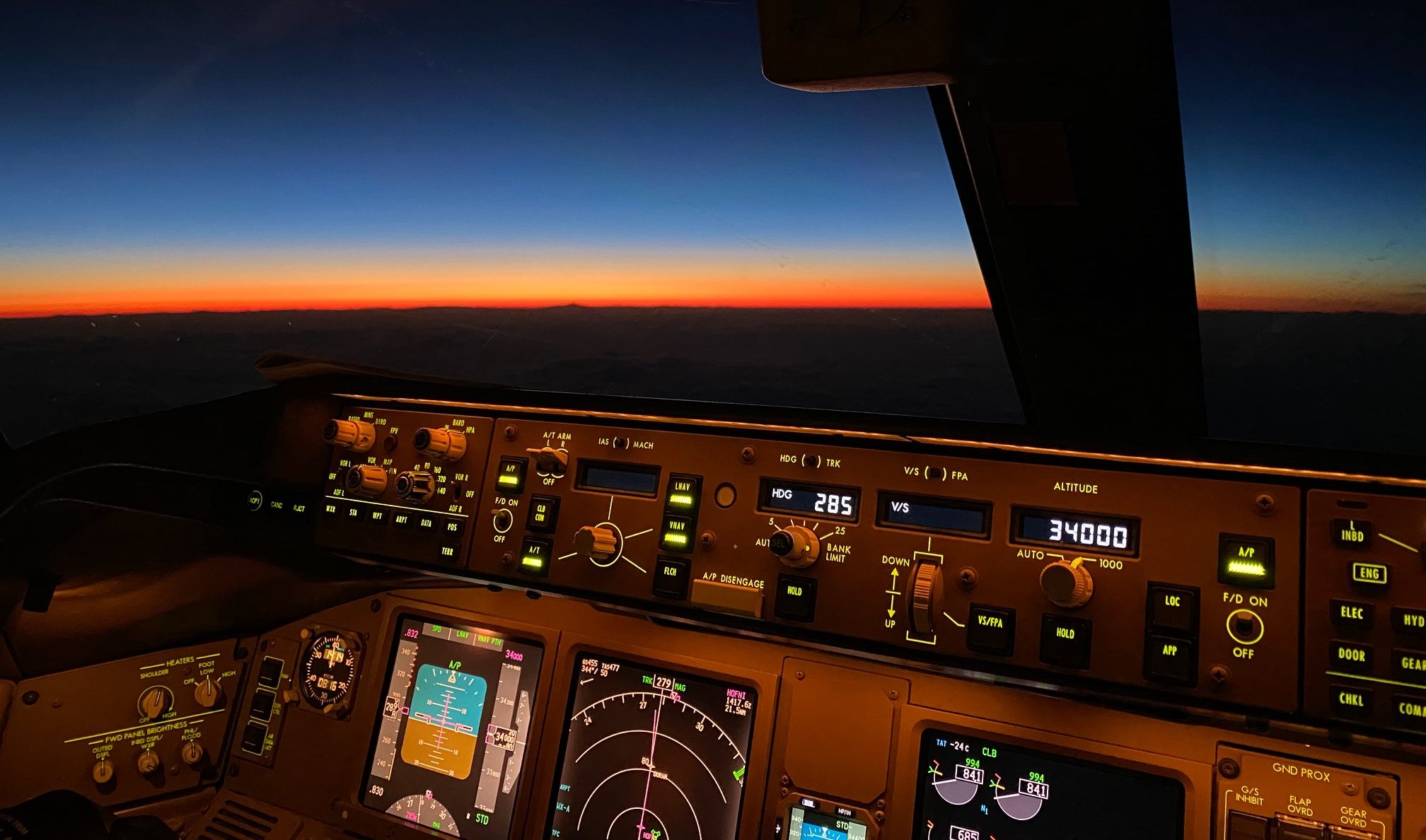
It’s a long journey, albeit a mundane one for airline pilots. Just like how we cruise at 34,000 ft up in the air, it’s also possible to cruise through our decades-long career and at the end of it all, looking back at what we’ve achieved. Some achieved significantly, adding value to the industry while others just….cruise. It takes a lot of inertia to get out of our own comfort zones – experimenting different flying methods, be proactive to gather information, constantly pushing ourselves to improve our craft – because ultimately, we want to be a proficient and skillful aviator.

And so this blog aims to do just that; to pen down my thoughts and to serve as a motivation for “would-be” aviators.

Design a site like this with WordPress.com
Get started